
The Salesforce ecosystem contains over 2,300 registered consulting partners globally. They range from solo freelancers to global systems integrators with thousands of certified practitioners. Choosing among them is genuinely difficult, and the consequences of choosing badly are significant.
I have been on both sides of this decision: as a consultant being evaluated, and as an advisor helping companies select the right partner. What I have learned is that the criteria most companies use to make this decision are often the least predictive of success.
Here is what actually matters.
Start With Scope Clarity
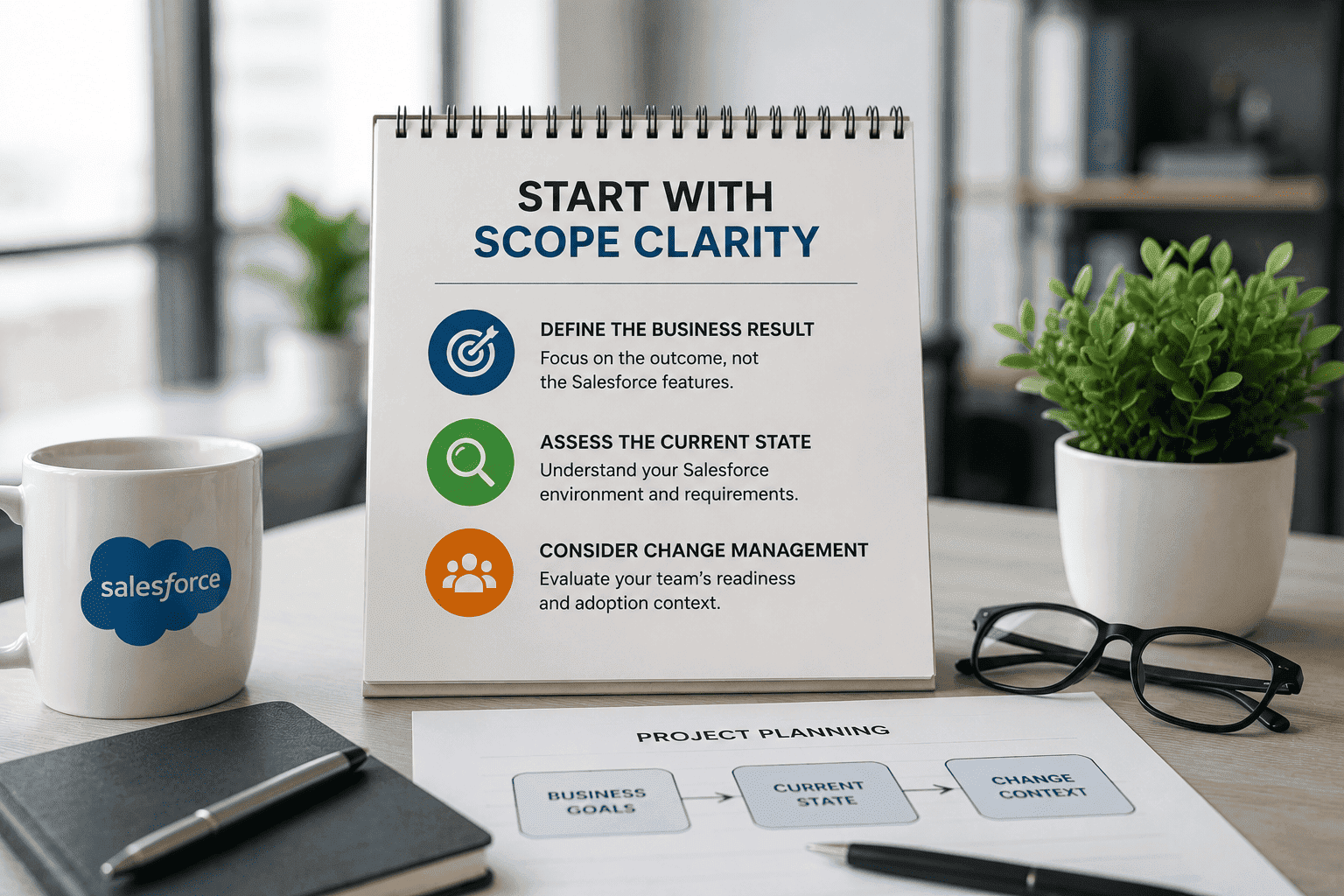
Before you evaluate a single partner, get clear on what you are actually trying to accomplish. This sounds obvious, but a striking number of companies enter partner selection with requirements so vague that they cannot meaningfully evaluate a proposal.
Define your scope in three clear levels. Start by identifying the main business result you want to achieve. This means understanding the goal behind the project, the problem it should solve, and the value it should create for the organization, customers, teams, or overall operations.
Not the Sales force features you want to implement, but the business result you are trying to drive. A fast sales pipeline, better forecasting accuracy, stronger win rates, and shorter sales cycles are all clear business outcomes
. When the desired result is not clearly defined, it becomes difficult to judge whether a partner has the right skills, strategy, and capability to deliver meaningful business value. Second, what is the current state of your Salesforce environment? A greenfield implementation requires a different partner profile than a complex remediation or a multi cloud optimization. Know which category you are in.
Third, what is your change management context? Are your salespeople eager adopters of new technology, or resistant veterans who have seen too many failed CRM rollouts? A partner who excels at technical delivery but underinvests in change management will leave you with a beautifully configured org that no one uses.
Evaluate Credentials Carefully
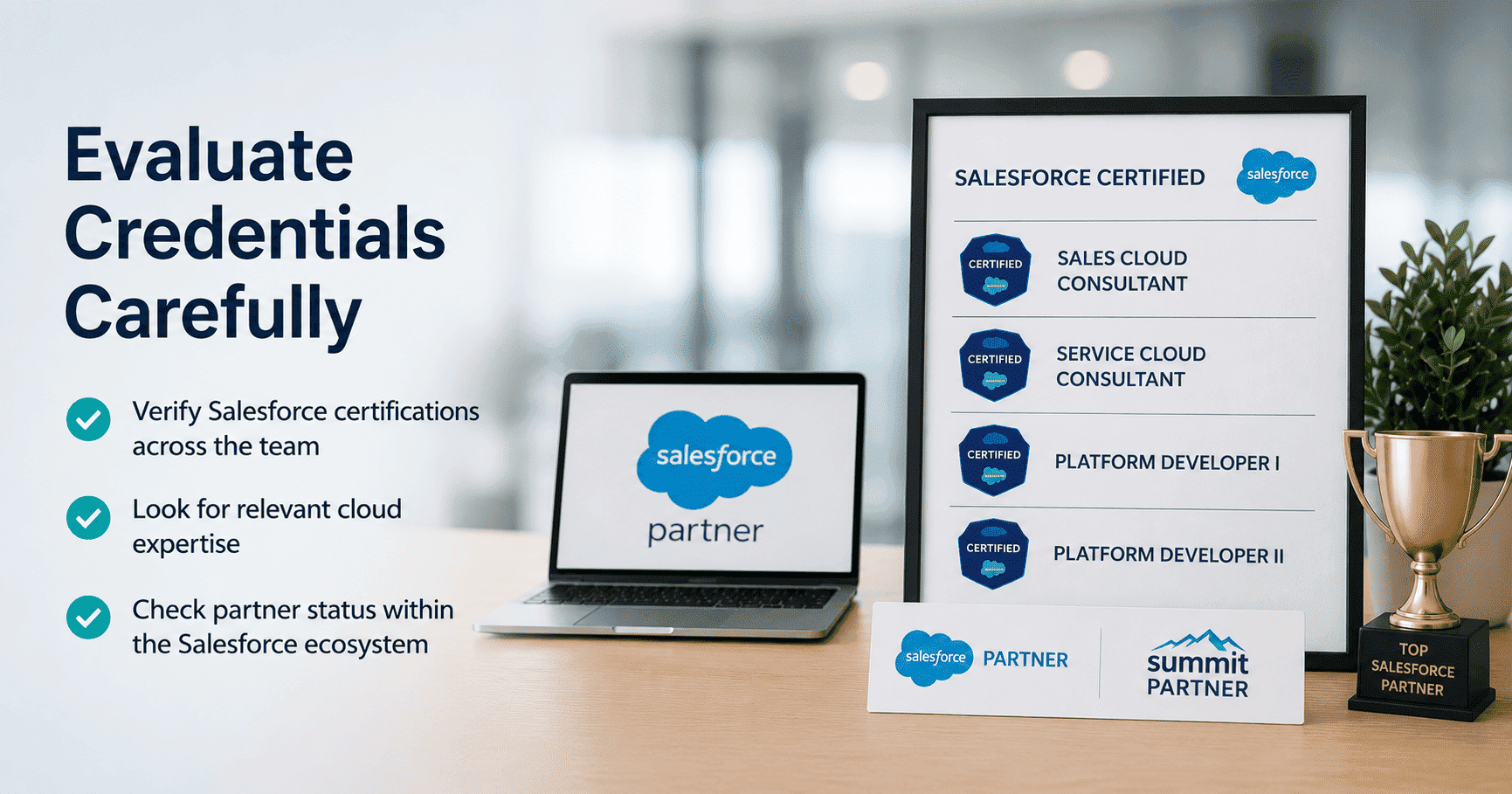
Salesforce certifications are a meaningful signal, but they require context to interpret. A partner with ten certifications concentrated in one practitioner is a very different offering from a partner with those same certifications distributed across a team of eight.
If you are implementing Sales Cloud, you want a partner with Sales Cloud Consultant and Application Architect credentials. If you are building on Service Cloud, confirm they have dedicated Service Cloud expertise. If your project involves custom development, look for Salesforce Developers with Platform Developer I and II certifications.
Beyond certifications, look at Navigator status within the Salesforce ecosystem. Salesforce Summit Partners and Ridge Partners have demonstrated delivery volume and customer satisfaction scores that Salesforce validates directly.
Prioritize Industry Experience
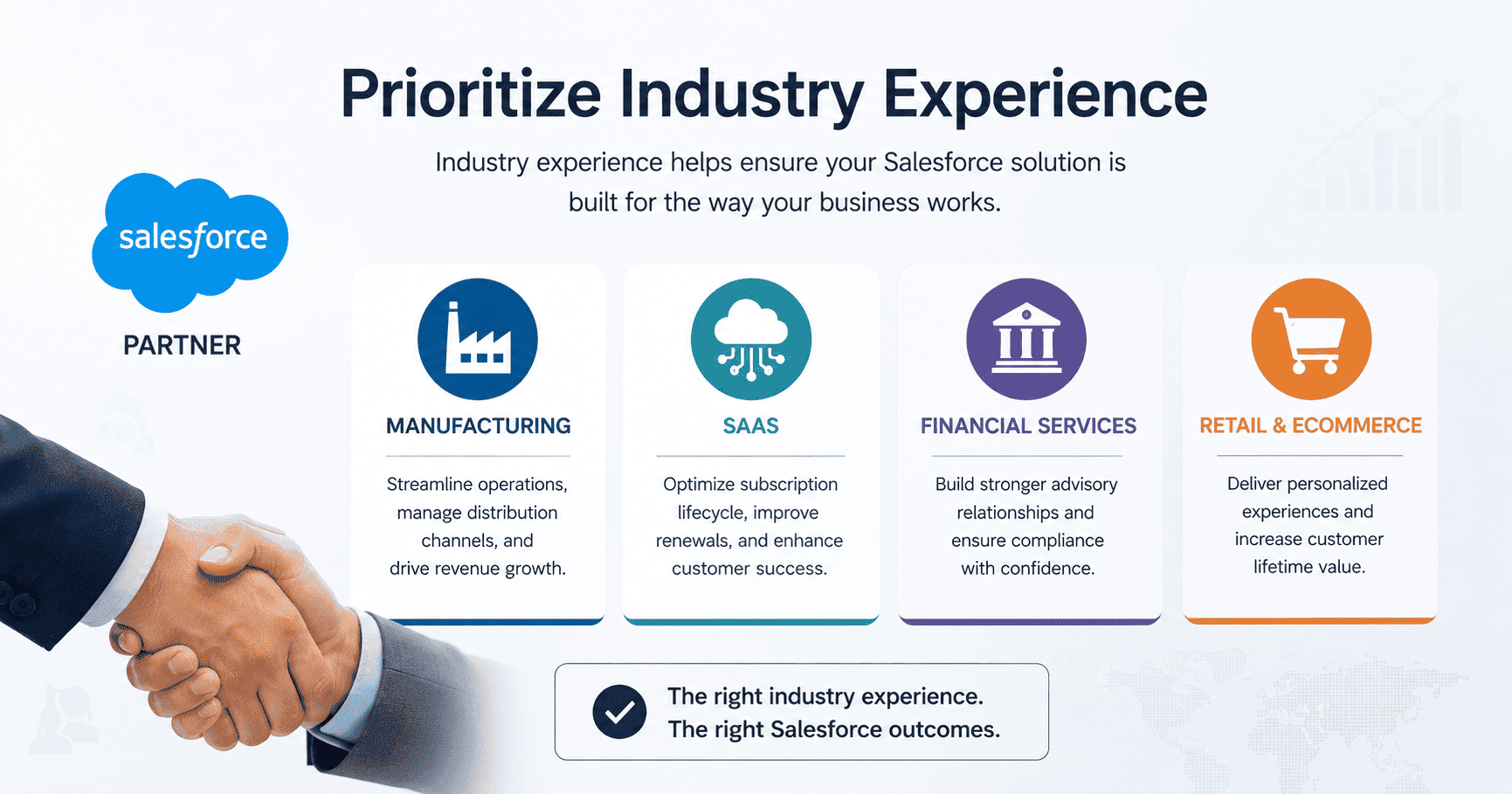
Salesforce is a horizontal platform, but sales processes are vertical. How a manufacturing company manage sits channel and distributor relationships is fundamentally different from how a SaaS company manages its subscription renewal pipeline, which is different again from how a financial services firm manages its advisory relationships.
They know which standard Salesforce capabilities map well to your process and which ones require customization. They have data models that work, sales stage definitions that reflect how your market actually buys, and reporting structures that resonate with your leadership team.
Ask every partner you evaluate how many clients they have served in your industry and what specific business outcomes those engagements delivered. If they cannot give you specific, reference checkable answers, that is informative.
Assess Their Discovery Process

The quality of a consulting partner is most visible before the contract is signed, specifically in how they run discovery.
They will want to understand how your team qualifies opportunities, what your handoff from marketing to sales looks like, how you manage forecast calls, and what your biggest pipeline accuracy challenges are. They will ask to speak with your sales reps, not just your leadership team.
A weak partner will ask you to fill out a requirements document and then build exactly what you described. This is dangerous because clients rarely know precisely what they need from Salesforce. The value of expertise is the ability to translate business problems into platform solutions, not to transcribe requirements into configuration.
If a partner presents a fixed price proposal without conducting meaningful discovery, treat that as a red flag.
Check References, Not Case Studies
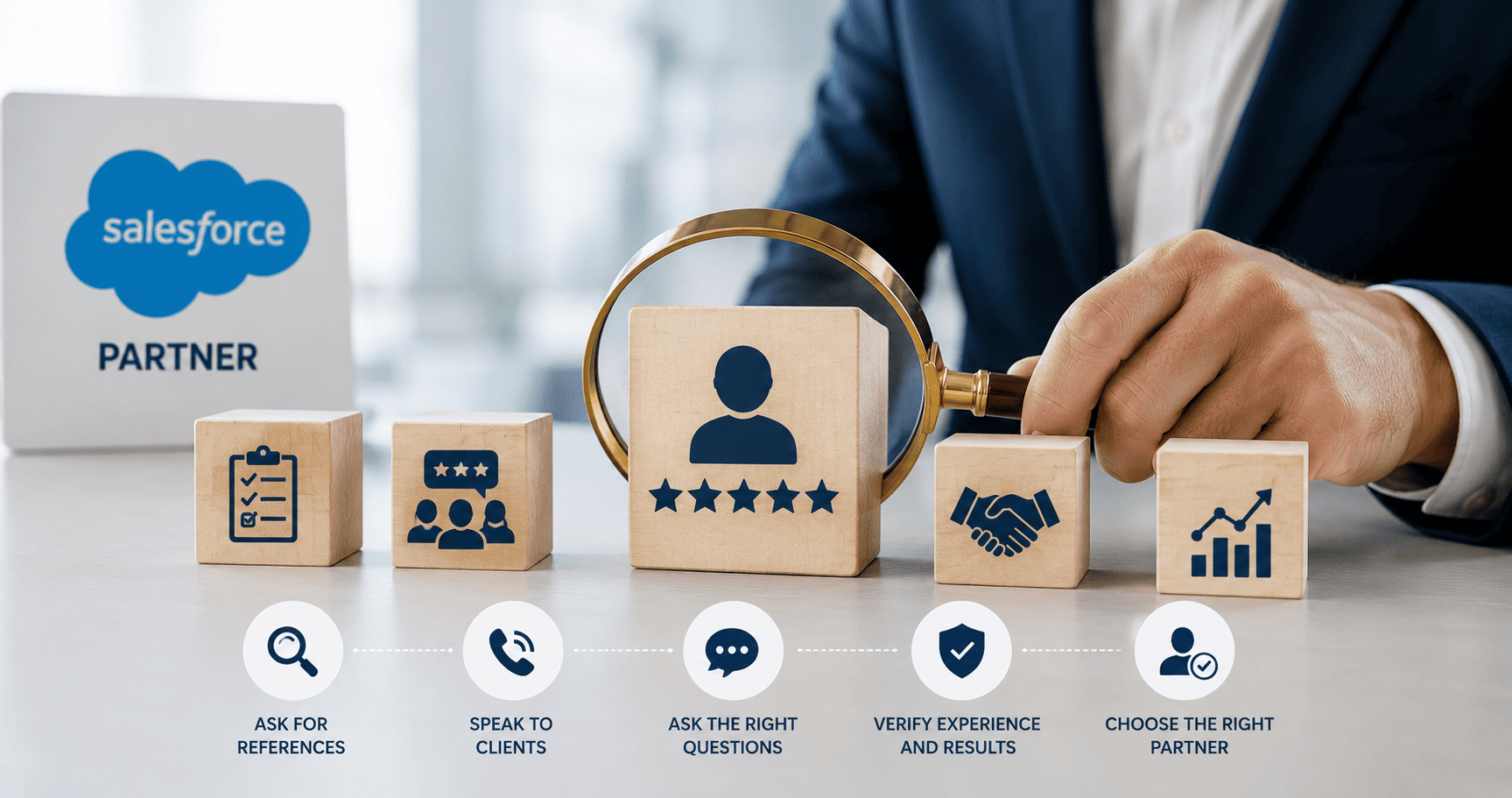
Case studies are marketing documents. References are reality checks. Ask every finalist partner to provide three to five references from clients with similar scope, industry, and complexity to your own project. Then actually call them.
When you speak with references, ask specific questions? How did they handle unexpected complexity? What was the quality of their post launch support? How did the sales team respond to the new system? Would you engage them again? Before signing an agreement, clearly define what success should look like. This helps you measure expectations, align goals, and choose a partner who can deliver real, practical business results.
Define What Success Looks Like Before You Sign

The final and most important step in partner selection is agreeing on success metrics before the engagement begins
Push your prospective partners to commit to outcome metrics, not just delivery milestones. Any partner can promise to complete configuration by a certain date. The partners worth working with will commit to adoption rates, pipeline data quality scores, and productivity improvements. That commitment signals both confidence in their approach and accountability for results.
Your Salesforce partner will shape how your revenue organization operates for years.
A Word on Price

Consulting fees are a common point of friction in partner selection, and the instinct to optimize for the lowest proposal is understandable. What I have observed repeatedly, however, is that the cheapest Salesforce implementation is rarely the most affordable one when you account for the full lifecycle cost.
A partner who wins the engagement on price often does so by understaffing the project, using less experienced practitioners, skipping discovery, or underinvesting in change management. The result is a technically complete implementation that fails to deliver adoption, requires a remediation engagement twelve months later, and ultimately costs more than a well run project would have from the start.
Evaluate price within context. A higher proposal from a partner with demonstrably relevant industry experience, a structured delivery methodology, and strong client references is a lower risk investment than a lower proposal from a partner who cannot evidence those things.
The right question when reviewing proposals is not which partner is cheapest but which partner gives you the highest probability of achieving the outcomes you defined..

Get In Touch


Let's Talk Business
