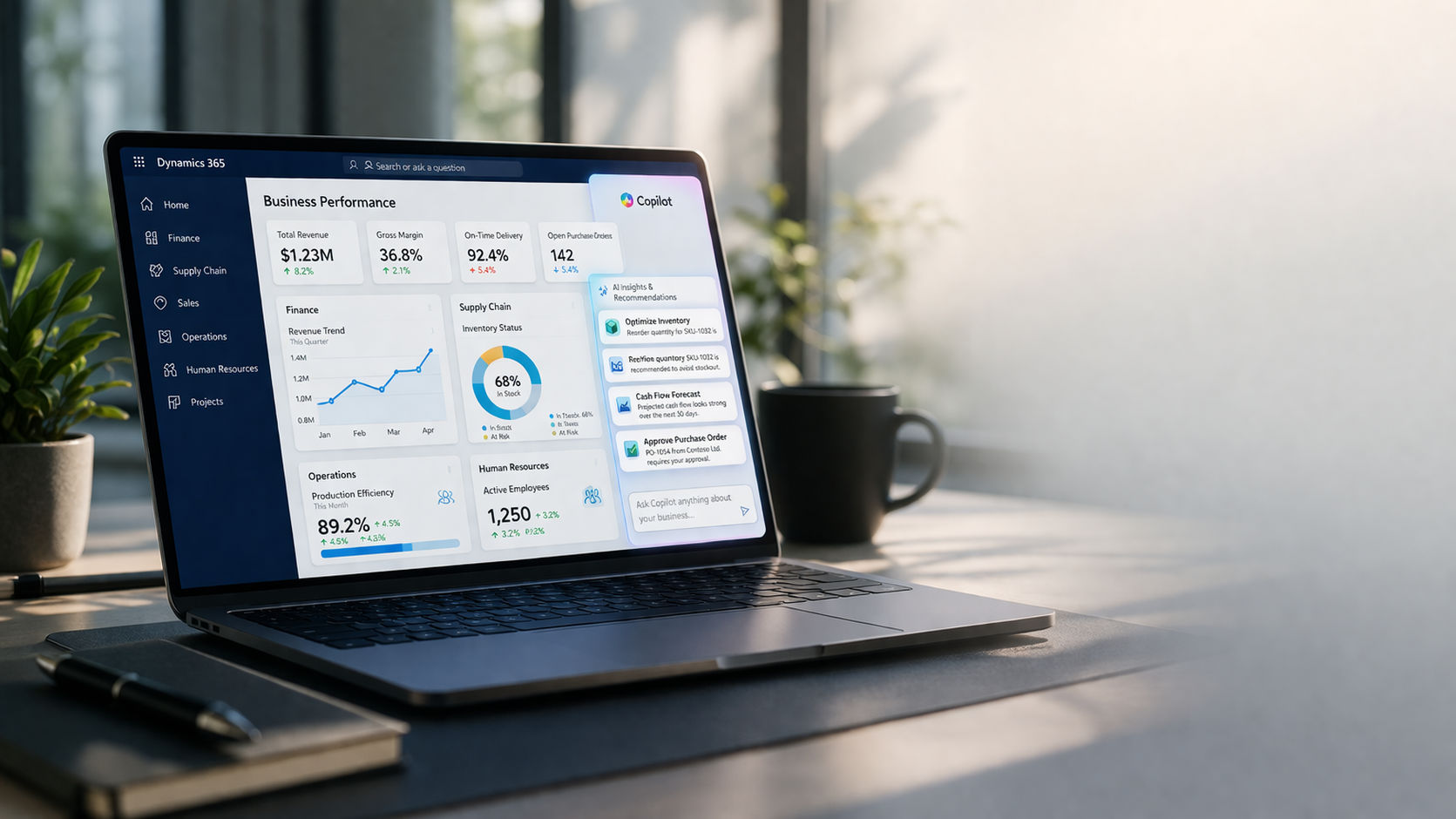
In a world of rapid digital transformation, businesses are under constant pressure to operate efficiently, innovate better, and deliver unparalleled customer experiences. Legacy Enterprise Resource Planning (ERP) systems laid the foundation for integrated business processes, but the future demands something far more intelligent, flexible, and self-sufficient (autonomous).
Enter Autonomous ERP — anew era of enterprise software that blends automation, Artificial Intelligence(AI), and real-time insights to support decision-making, streamline operations, and alter the dynamics of business operations.
In this article, we explore what Autonomous ERP is, why it matters, and how Microsoft Dynamics 365 with Copilot is accelerating organizations toward a more intelligent future.
What is Autonomous ERP?
Autonomous ERP refers to enterprise software systems that have the capability of:
· Streamlining operations by automating tasks traditionally done manually
· Continuously learning from data through machine learning
· Anticipating business needs and suggesting optimal outcomes
· Minimize manual interventions and operational bottlenecks
· React in real time with actionable intelligence
Unlike traditional ERP, which provides a centralized database and business workflow tools, Autonomous ERP augments core systems with advanced AI, remodeling ERP from a reactive backbone into a proactive, intelligent engine.
Why Autonomous ERP Matters Today
Modern business complexity has risen sharply due to the following factors:
1. Global supply chain volatility
2. Rapid market demand shifts
3. Workforce shortages and skill gaps
4. Cybersecurity concerns
5. Increasing customer expectations
All of these patterns demand:
· Faster decision-making cycles
· End-to-end visibility
· Predictive insights instead of using historical reports
· Process self-healing, and
· Process optimization
By integrating intelligent technologies directly into business processes, autonomous ERP unlocks these capabilities and helps organizations transition from manual control to autonomous results.
The Role of AI and Copilot in ERP
Artificial Intelligence (AI) is the primary facilitator behind the shift from conventional ERP systems to autonomous platforms. Apart from recording transactions and enforcing already enabled workflows, AI enables ERP systems to analyze data, identify patterns, and assist the decision-making process.
ERP becomes more intelligent, flexible, adaptive, and forward-looking under this paradigm. Artificial Intelligence has become the driving force for autonomy in ERP.
Key AI capabilities include:
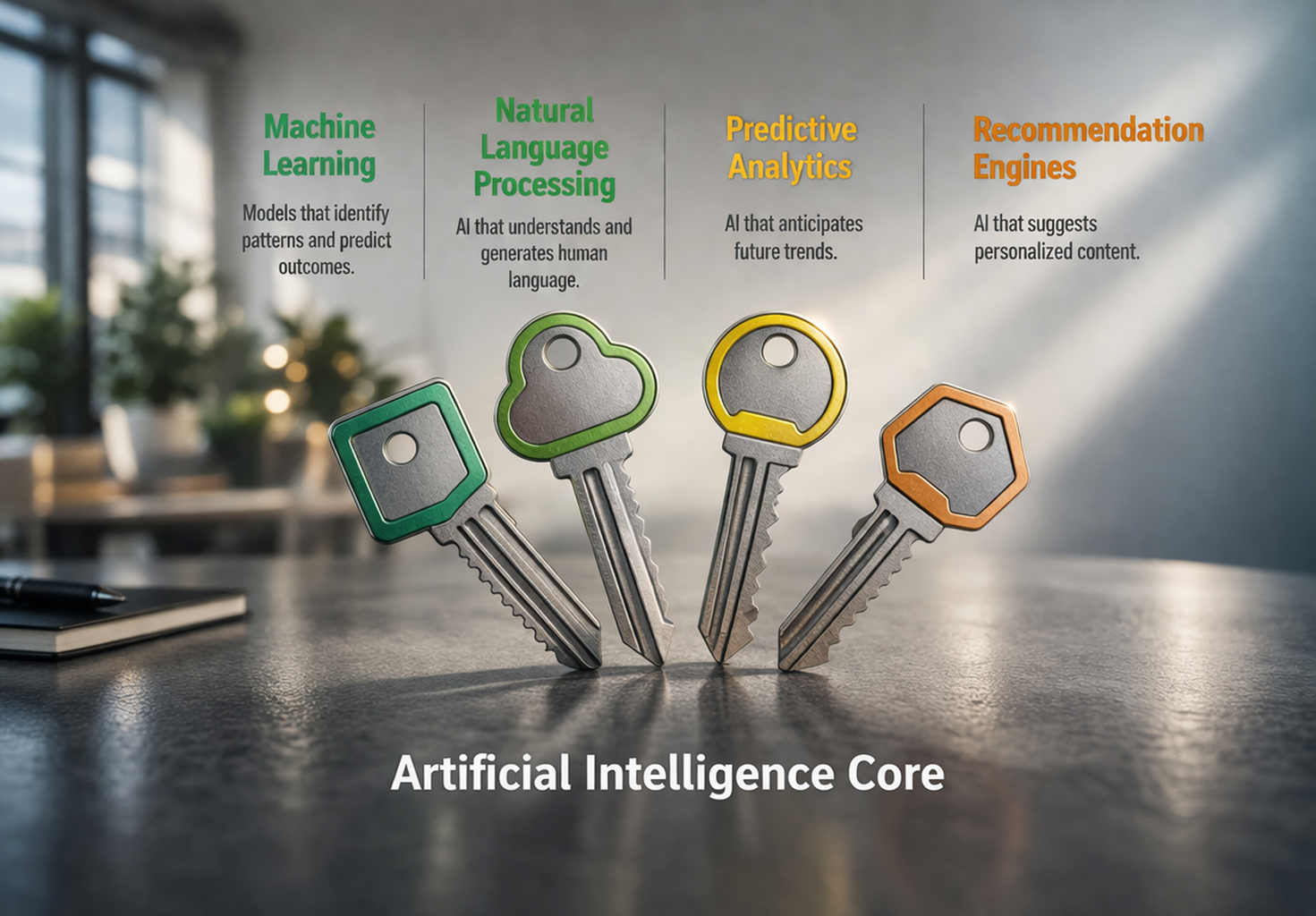
By integrating Copilot, an intelligent assistant, into Microsoft 365 and Dynamics 365, AI redefines how users interact with ERPs.
How Copilot Enables Intelligence Inside ERP
Within D365, Copilot adds a new level of intelligent interaction and automation; AI’s function moves from background analytics to real-time user collaboration.

These capabilities save human time instead of manual work.
Key Autonomous ERP Features Enabled by D365 + Copilot
Organizations can transform their decision-making processes and business operations by utilizing the following capabilities. Businesses can maximize resources, increase productivity, and achieve long-term, scalable growth by gaining access to and leveraging intelligent ERP features.
1. Predictive Financial Planning
Stakeholders are able to forecast budget results, model economic scenarios, and detect irregularities, anomalies, and risk signals.
2. Intelligent Supply Chain Management
Allows businesses to automatically suggest the best purchase orders, track shipments in real time, and predict inventory shortages. Businesses can react more quickly to changes in the market and more accurately maintain supply chain continuity by utilizing demand sensing and predictive modelling.
3. Employee Centric Automation
By automating HR onboarding procedures and producing performance insights with little manual labor, workforce operations can be made simpler. While increasing worker productivity and engagement, intelligent scheduling and capacity planning guarantee the best possible use of available resources.
4. Customer engagement optimization
Suggest next-best actions to customers by utilizing AI-driven insights to route service requests and customer sentiments.
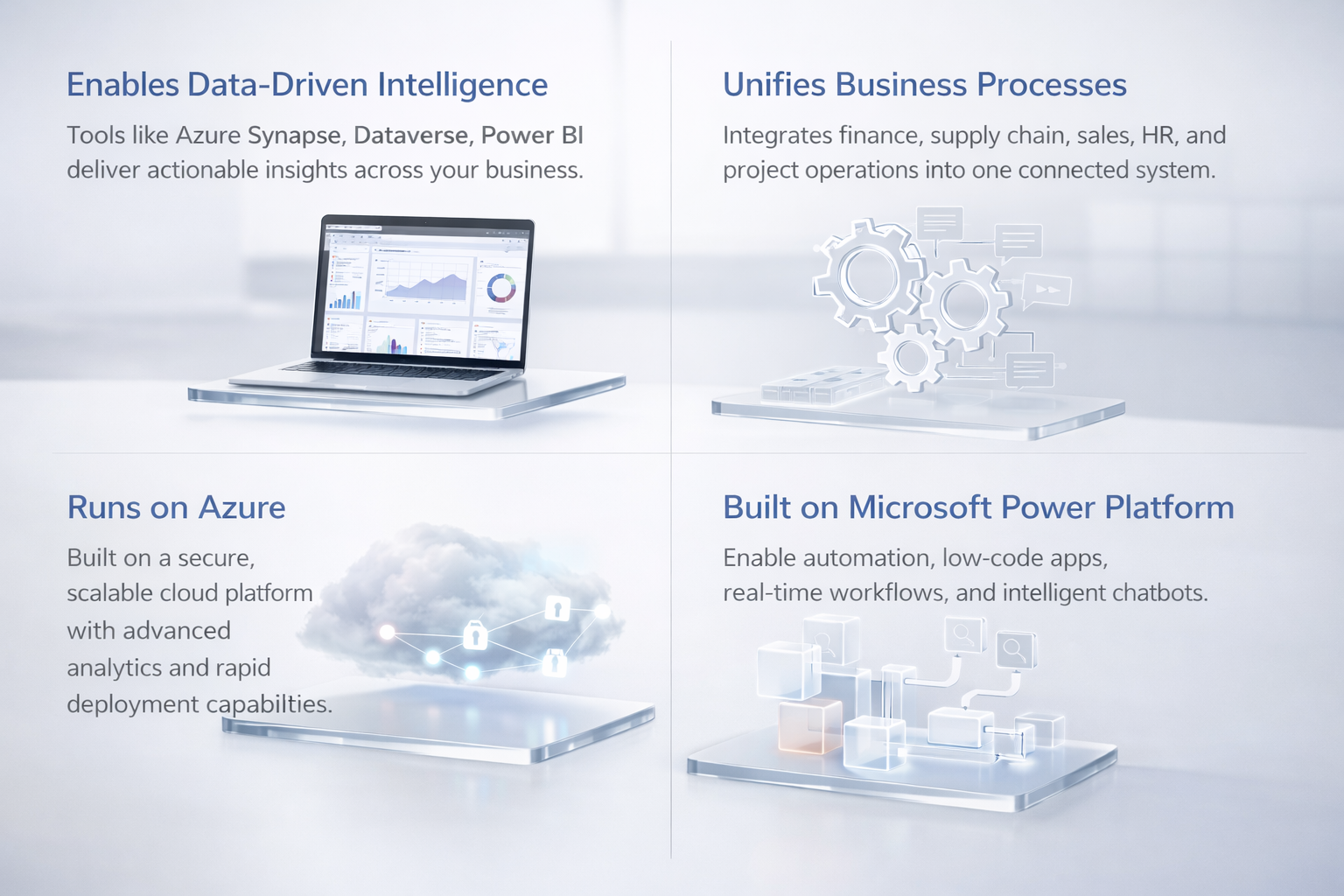
What Makes Microsoft D365 the Ideal Autonomous ERP Platform?
Microsoft Dynamics 365 stands out for the following flexibility and features. In order for autonomous systems to operate efficiently, this interconnected stack removes data silos and establishes a single source of truth.
Real-World Impact of Autonomous ERP with Dynamics 365 & Copilot
Businesses implementing these technologies are experiencing visible advantages:
1. Operational Efficiency
· A decrease in human error
· Faster processing times
· Automated workflows are adjusted dynamically
2. Smarter Decision-Making
· Delayed reporting is replaced by real-time insights
· AI suggests proactive decisions rather than reactive ones
3. Employee Productivity
· Less time utilization on manual tasks
· Knowledge work becomes more effective and impactful
4. Improved Customer Experience
· Faster response times
· Predictive service and personalized selling
· Touchpoints across the client lifecycle are connected via integrated data.
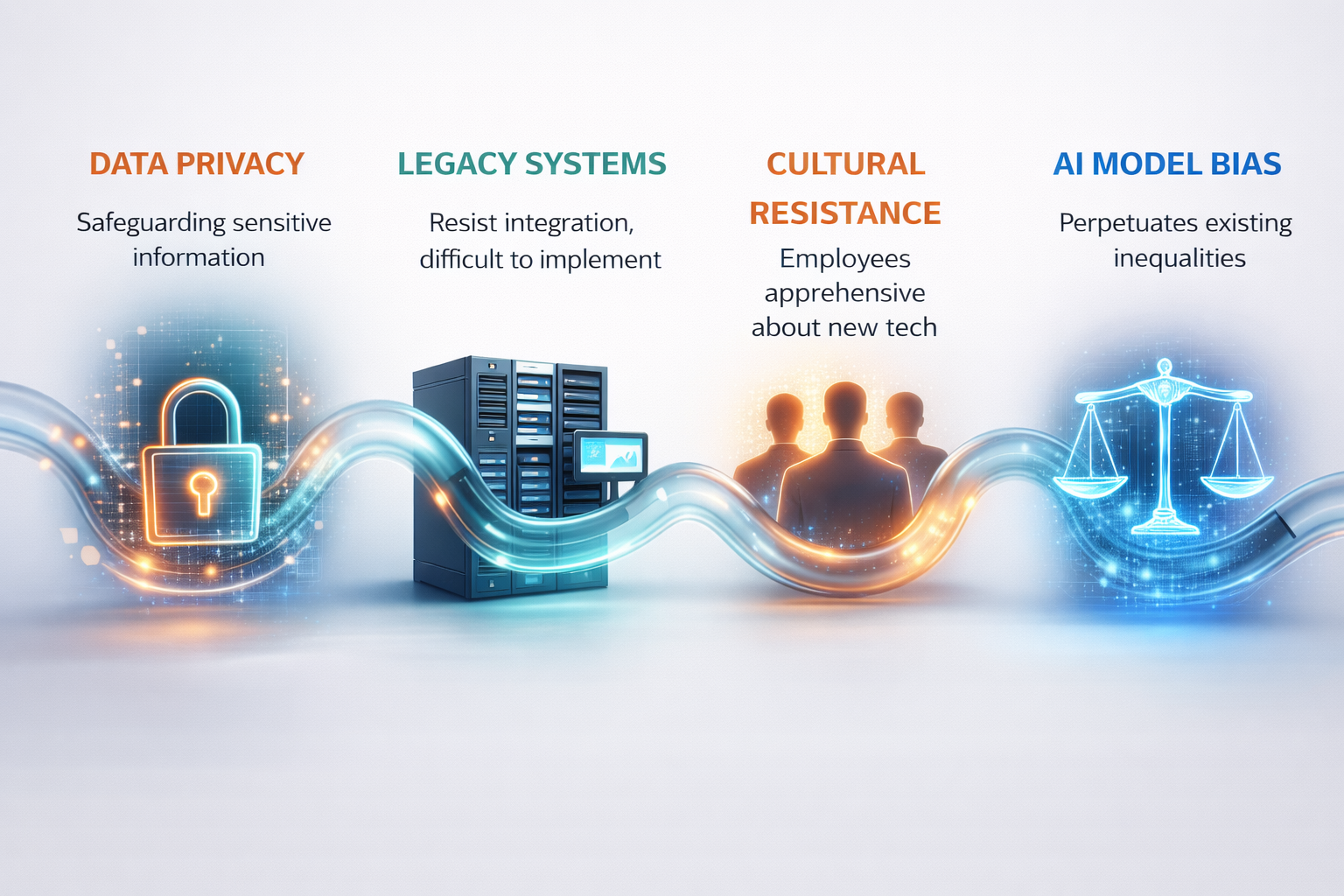
Challenges to Consider
Autonomous ERP transformation isn’t without challenges; it must be addressed through continuous learning programs, structured governance, and strong leadership.
Future Trends: Autonomous ERP Will Evolve Further
As autonomous ERP continues to evolve, enterprise systems will move toward fully adaptive workflows that adjust dynamically with little to no human intervention. Advances such as explainable AI will allow systems to make recommendations, while cross-enterprise collaboration, real-time compliance monitoring, and IoT-driven operational inputs will further enhance intelligence and trust.
With ongoing digitalization and transformation in Microsoft Dynamics 365 and Copilot, the scope of autonomous business systems will expand significantly, enabling organizations to operate with greater efficiency, adaptability, and transparency.
AI Engines vs Intelligent Agents in ERP: The Next Evolution in Dynamics 365
As ERP systems evolve toward automation, it is important to distinguish between AI engines and intelligent agents, as both play distinct roles within ERP platforms. Intelligent agents convert insights into actions and act as the execution layer, while AI engines supply the analytical framework. With respect to Microsoft Dynamics365, this distinction defines how ERP systems move from being intelligent to being truly autonomous.
AI Engines: The Brain Behind Intelligent ERP
AI engines are responsible for data analysis, pattern identification, and generating predictions across ERP processes. They are embedded in core ERP modules and operate in the background. Within Dynamics 365, AI engines:
· Analyze current and legacy transactional data
· Identify patterns and irregularities in operations, supply chain, and finance.
· Make predictions, forecasts, and suggestions.
AI engines aren’t standalone; instead, they rely on human intervention or predefined workflows to take actions.
Intelligent Agents: From Insight to Autonomous Action
Intelligent agents are expected to be the next phase of ERP evolution. Agents are action-oriented, context-aware, and goal-driven, in contrast to AI engines. They not only analyze data, but they also engage in business processes. In an Autonomous ERP environment, agents:
· Monitor business conditions and signals continuously
· Act in accordance with predetermined objectives and limitations.
· Communicate with other users, systems, and agents
· Use continuous learning and feedback models
Within Dynamics 365, intelligent agents can operate across modules, orchestrating workflows end to end rather than within isolated functions.
Conclusion
The next frontier in enterprise software is autonomous ERP, which turns conventional systems into intelligent, flexible, and self-optimizing engines of business value. Companies can intelligently automate processes, make quicker, better decisions, provide employees with real-time insights, and radically change the way business operations are managed by fusing Copilot's power with Microsoft Dynamics 365. Autonomous ERP is no longer only a competitive advantage in today's quickly changing business environment; it is now a strategic necessity for long-term success and sustainable growth.
About the Author
Ayila Jawad is a Microsoft Dynamics 365 Functional Consultant with over 2.5 years of hands-on experience delivering end-to-end ERP solutions across Finance, Supply Chain, and Project Operations. With a strong foundation in both functional and technical domains, she has worked extensively on Dynamics 365 Finance &Operations, Microsoft AX 2012/2009, and Project Operations, supporting organizations across retail, manufacturing, distribution, and health sciences industries.

Get In Touch


Let's Talk Business
