Microsoft D365
We’re no strangers to the fact that Enterprise Resource Planning (ERP) systems are the backbone of modern-day organizations. The seamless integration of various business processes, including Finance, Supply Chain, Commerce, Human Resources, and much more, sets the basis for a unified digital environment. Two ERP platforms that continue to dominate the enterprise technology landscape and are widely used are Microsoft Dynamics 365and SAP.
However, these two platforms may deliver exceptional enterprise capabilities; however, there is a clear-cut difference between their implementation methodologies and approaches, pricing structures, overall complexity, and target audiences. Therefore, it is of utmost importance for organizations to understand these differences when planning long-term digital transformation initiatives.
This article provides an in-depth comparison between Dynamics 365 and SAP, aiming to help organizations determine which system best suits their requirements and needs.
Introduction to Dynamics 365 and SAP
Microsoft Dynamics 365 has been built keeping in mind the cloud-first philosophy. It doesn’t exactly force organizations to deploy the entirety of its suite simultaneously, but it does allow them to implement applications over time. At the same time, the seamless integration between modules isn’t compromised in any way. This approach sets the basis for gradual digital transformation, therefore making it appealing to growing organizations transitioning from legacy systems.
On the other hand, SAP, S/4 HANA in particular, follows a deep enterprise standardization model. SAP solutions are specifically designed to handle complex business operations with tightly integrated business processes. Instead of focusing on modular entry points, SAP imposes great emphasis on process consistency, comprehensive enterprise control, as well as highly structured workflows that support both large- scale operational complexity and global compliance.
Keeping it simple, Dynamics 365 prioritizes flexibility and agility, whereas SAP prioritizes depth and organizational standardization.
Functional Capabilities
Both of these ERP systems provide comprehensive functionalities that cover the core business processes mentioned below:
- Financial Management & Accounting
- Procurement and Vendor Management
- Inventory and Warehouse Management
- Supply Chain and Logistics
- Project Accounting
- Reporting and Analytics
As mentioned earlier, the strengths greatly differ depending on industry requirements Dynamics 365 excels primarily in service, retail, and mid-to-large scale enterprises where great emphasis is given on gradual digital transformation, flexible workflows, and much more. At the same time, Dynamics 365 also offers extensive capabilities revolving around financial operations, project accounting, and retail management, supported by modern analytics and data-driven insights. Additionally, leveraging the latest advancements in Generative AI, Microsoft has introduced Dynamics 365 Copilot within its ERP and CRM solutions. This innovative tool automates repetitive tasks, accelerates innovation, and enhances business outcomes across all departments. Copilot in Dynamics 365 is empowering organizations to focus on strategic initiatives and drive greater efficiency in their processes.
Similarly, SAP stands out for its deep enterprise-grade capabilities across finance, supply chain, manufacturing, and human capital management, making it a preferred choice for large-scale and complex organizations. SAP excels in industries such as manufacturing, logistics, utilities, and pharmaceuticals, where robust process standardization, end-to-end integration, and regulatory compliance are critical. SAP now offers tools like SAP AI Core and SAP Business Technology Platform (BTP) to enhance predictive insights, automate repetitive processes, and support intelligent enterprise initiatives. These capabilities empower organizations to optimize business performance, improve operational efficiency, and focus on strategic growth initiatives.
Integration Ecosystem
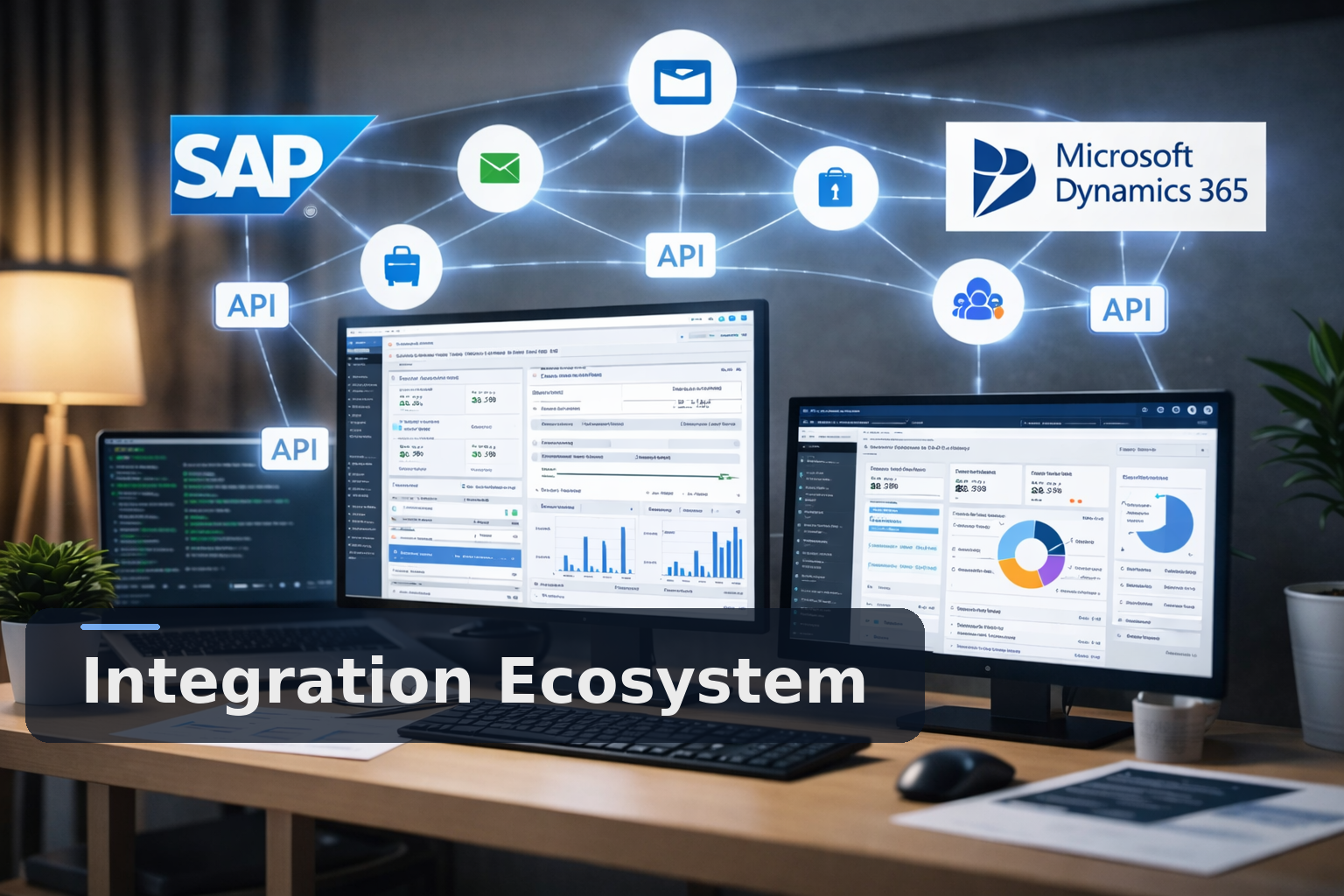
Integration capabilities are deemed to be of great importance for influencing overall ERP effectiveness as enterprise systems must connect to a bunch of applications, environments, and platforms. Out of the box, Dynamics 365 benefits from native integration with the Microsoft ecosystem, including:
- Microsoft 365
- Power BI
- Azure
- SharePoint
The result of this integration is a familiar user experience and the ease for organizations to extend existing ERP functionality through the use of low-code or no-code development tools.
SAP offers a diverse integration ecosystem through the SAP Business Technology Platform that offers support for industry-specific applications as well as legacy enterprise systems and specialized operational technologies.
A key component of BTP is the SAP Integration Suite, which includes:
- Cloud Integration (CPI)
- API Management
- Event Mesh
- Open Connectors
- Integration Advisor
SAP integrations are often considered to be highly structured, but there remains a lingering requirement for additional specialized technical expertise in comparison to Microsoft’s low-code integration requirement.
Adoption and User Experience

It is a known fact that user adoption plays a crucial role in overall ERP success. Systems that are difficult to use inevitably result in lower production, increased training costs, or may even result in users bypassing best practices.
Dynamics 365 emphasizes an interface similar to Microsoft Office applications. Users familiar with Office, Excel, and Outlook interfaces have reported it to be easier to learn and is customization friendly which eventually results in a reduction of both onboarding time and training expenses.
SAP might be more powerful, but it traditionally features complex interfaces specifically designed for deep process control. Despite the modernization of its interface, organizations and users may still require structured training programs in an effort to ensure effective adoption.
Implementation Timeline and Complexity
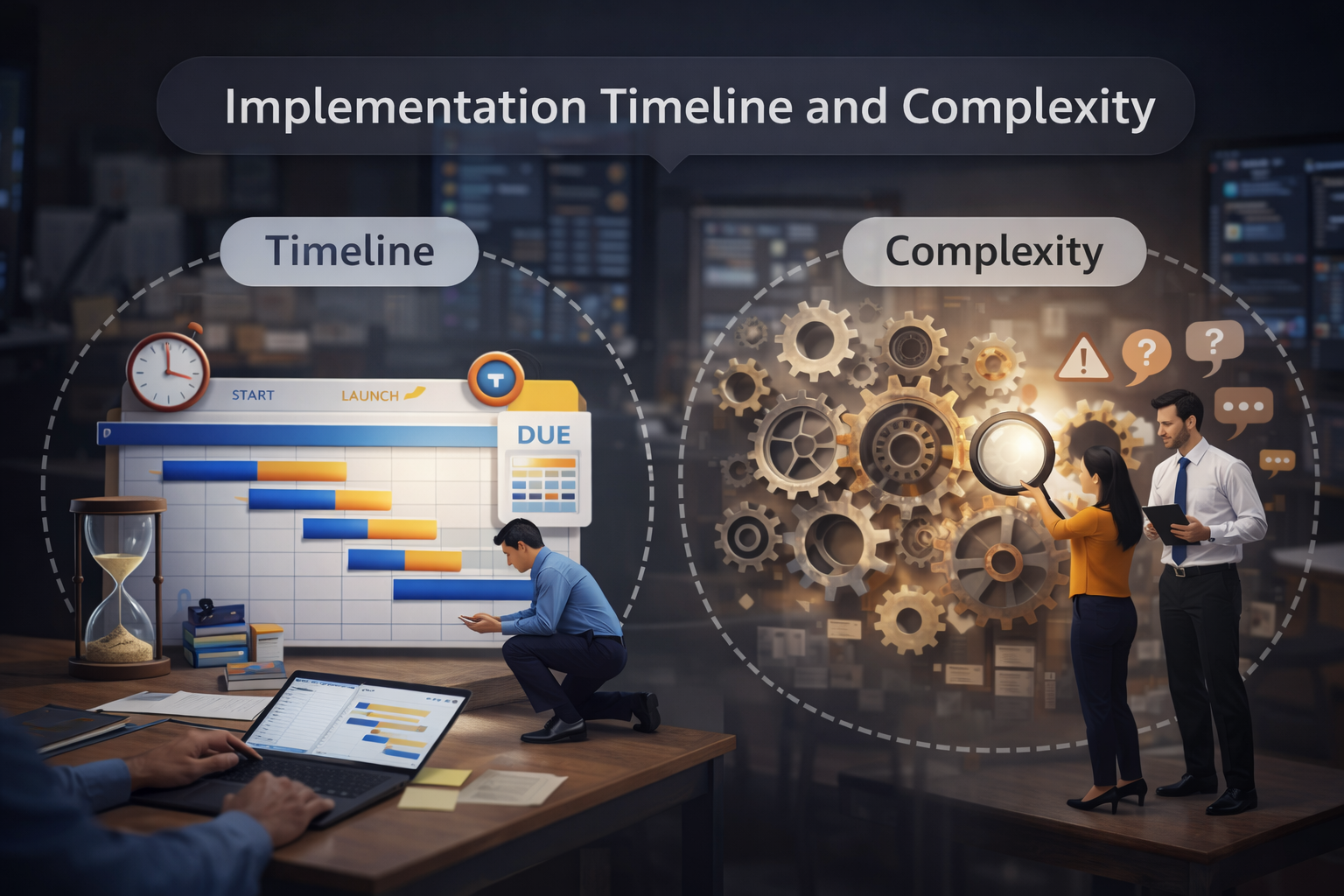
Dynamics 365 implementations are often quick er and more modular, and they even allow organizations to deploy certain modules and expand their functionality over a period of time. The adoption of such an approach drastically decreases implementation risks and accelerates the realization of business benefits.
SAP’s implementations are often complex, require Sophisticated customization and longer implementation timelines, often for larger-scale organizations implementing processes across subsidiaries, various regions, and operational systems.
SAP’s longer implementation cycle and timeline may seem like a fatigue to many, but the result is the provision of robust and increasingly standardized enterprise systems capable of handling challenging and complex operations with ease.
Cost Considerations

Dynamics 365 offers subscription-based licensing models that empower organizations to pay for specific modules as well as the roles required. The fundamental advantage of this offering results in lower initial investment costs, best suited for growing organization from mid-sized to large organizations and operations opting for gradual ERP adoption.
Unlike its counterpart, SAP implementations often mandate higher licensing, infrastructure, and consulting costs. All of these, amalgamated, reflect the scale, depth, and complexity supported by the platform.
When evaluating the total cost associated with ownership, organizations must also consider additional factors apart from licensing. Some of these have been mentioned as follows:
- Implementation and consulting costs
- Training and change management
- Customization and integration requirements
- Infrastructure expenses
Best Use Cases
Dynamics 365 is most commonly best suited for:
- Organizations looking for cloud-first, flexible ERP solutions
- Companies that are heavily invested in the Microsoft ecosystem
- Mid-sized to large-scale organizations looking forward to gradual digital transformation
- Businesses that require quick ERP implementation timelines
On the other hand, SAP is best suited for:
- Large organizations handling complex operations on a day-to-day basis
- Manufacturing-intensive industries
- Organizations that require deep process standardization
Final Words
The essence of the comparison between Dynamics 365 and SAP isn’t only about determining which system is better, but it is also about identifying which system aligns best with organizational strategy, operational complexity, and long-term growth plans.
An ideal ERP decision requires in-depth evaluation of growth projections, business processes, and regulatory compliance. Organizations that manage to carefully align ERP selection with strategic objectives would eventually maximize long-term operational efficiency and return on investment.
About the Author

Zeerak Waqas isa Microsoft Certified Functional Consultant specializing in Supply Chain Management (SCM) within Microsoft Dynamics 365. He brings strong expertise in requirement gathering, functional documentation, testing support, and user training to help organizations optimize supply chain processes and improve operational efficiency.

Get In Touch


Let's Talk Business
